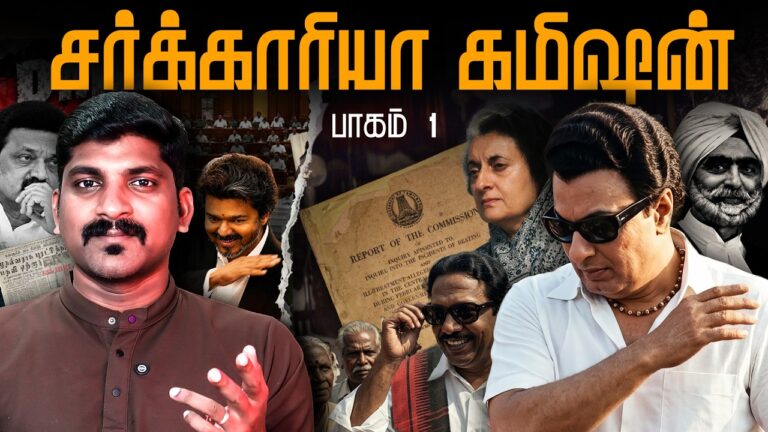
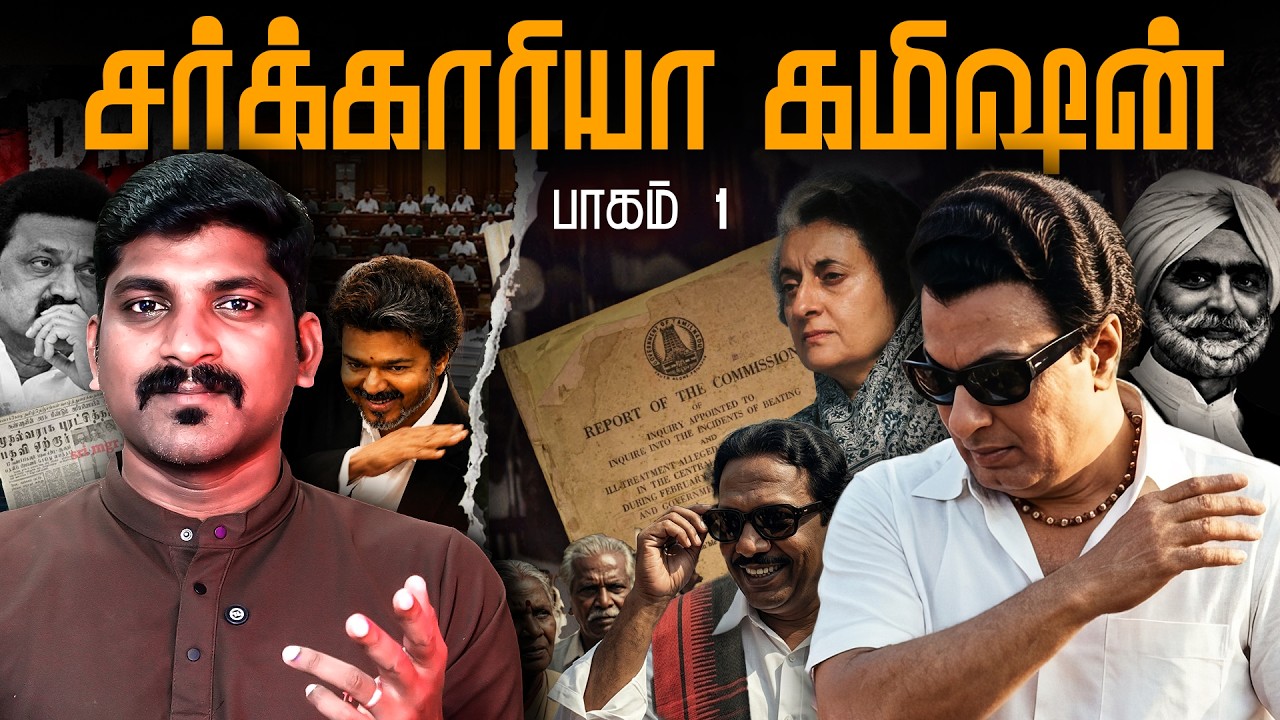
The Sarkaria Commission has suddenly returned to the centre of Tamil Nadu’s political debate, nearly five decades after it was appointed.
The issue resurfaced in the Tamil Nadu Assembly after Chief Minister Vijay referred to the commission and its findings while criticising the DMK during his recent speech. His remarks triggered a major political confrontation, with DMK legislators strongly objecting to the allegations.
But what exactly was the Sarkaria Commission? What did it investigate? And how accurate are the claims being made about its findings?
What Was the Sarkaria Commission?
The Sarkaria Commission discussed in the current political controversy should not be confused with the much later Sarkaria Commission on Centre-State Relations.
The 1976 commission was headed by Justice R. S. Sarkaria and was appointed to investigate allegations of corruption and misuse of official position involving the then DMK government in Tamil Nadu.
The commission was constituted on February 3, 1976, following allegations made against former Chief Minister M. Karunanidhi and several of his ministers. The inquiry examined a large number of allegations relating to the functioning of the government.
Why Was It Set Up?
The political background was extremely important.
Karunanidhi’s DMK government had been dismissed by the Union government on January 31, 1976, during the Emergency. Allegations of corruption and administrative irregularities were among the issues cited in the political campaign surrounding the dismissal.
The subsequent commission was asked to examine a wide range of allegations involving the former Chief Minister and other ministers.
The inquiry covered 28 allegations, including issues relating to government contracts, alleged misuse of official power, property and financial matters, industrial licences and the use of government machinery.
The Veeranam Project: The Most Famous Case
Among all the allegations, the Veeranam drinking-water project became one of the most politically significant.
The project was intended to bring water from Veeranam Lake to Chennai. The commission examined allegations surrounding the awarding of the contract to Sathyanarayana Brothers, the role of government officials and alleged political intervention.
According to the commission’s findings, Karunanidhi had abused his official position and directed the Chief Engineer to shape the tender recommendations in a way that would favour Sathyanarayana Brothers.
The report also described the decision to entrust the project to the contractor as a major administrative failure and attributed responsibility for the financial loss to Karunanidhi and then Public Works Minister Sadiq Pasha.
Did the Commission Prove a ₹29 Lakh Bribe?
This is where the historical record needs to be explained carefully.
The commission examined an allegation that ₹29 lakh was paid in seven instalments to Karunanidhi as an illegal gratification.
However, the commission did not say that this particular payment had been conclusively established.
Its finding was that the evidence did not provide sufficient independent corroboration to establish the alleged bribe beyond doubt. The report nevertheless found the broader allegations concerning the handling of the Veeranam contract to be serious and substantiated in important respects.
That distinction is important when discussing the Sarkaria Commission today.
Other Allegations Examined
The commission did not investigate only the Veeranam project.
Its inquiry covered several other allegations, including:
- Aerial spraying contracts
- Alleged favours to publication firms
- Industrial loans
- Brewery licence issues
- Property-related allegations
- Government contracts
- Samayanallur power station
- Alleged misuse of government machinery
- Matters involving several ministers
Some allegations were found to be substantiated, while others were rejected or lacked sufficient evidence.
So, Was CM Vijay’s Assembly Claim “True”?
The answer is not simply yes or no.
Vijay was referring to a genuine historical commission and genuine findings contained in its report. The commission did make adverse findings concerning certain allegations against Karunanidhi and other members of the former DMK government.
However, individual allegations had different findings. Some were held to be established or substantiated, while other specific allegations were not conclusively proved.
Therefore, presenting the entire Sarkaria Commission episode as though every allegation against every DMK leader was proven in court would be misleading.
The commission was an inquiry commission, and its findings should be distinguished from a criminal court conviction.
Why Has the Issue Returned Now?
The controversy has gained renewed attention because Vijay brought the decades-old report into a current political fight with the DMK.
The remarks triggered strong protests from DMK legislators, and the Assembly witnessed an intense confrontation. The dispute subsequently expanded into a wider political exchange between Vijay and DMK leaders.
For Vijay, the Sarkaria Commission has become part of his argument against the DMK’s political record.
For the DMK, the issue is being portrayed as an attempt to revive old allegations for political purposes.
Part 1: The Key Takeaway
The Sarkaria Commission was not a fictional or newly created political allegation. It was a real 1976 inquiry into allegations involving the then DMK government.
Its report contained serious adverse findings on several matters, including the Veeranam project. At the same time, not every allegation was conclusively established, and the commission’s findings should not automatically be described as criminal convictions.
That historical distinction is at the heart of the current political controversy.