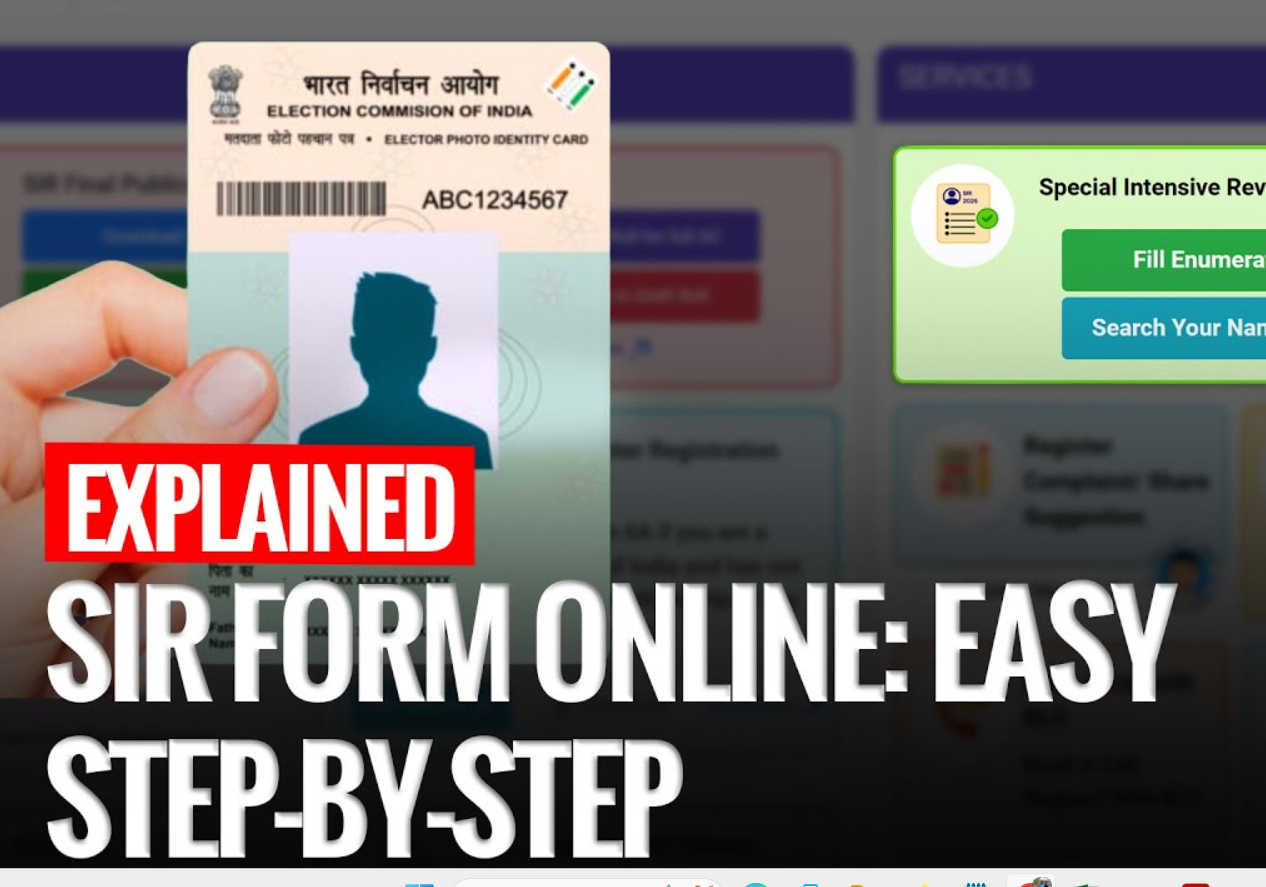
The SIR voter list plays a critical role in ensuring free, fair, and transparent elections in India. Every eligible citizen has the constitutional right to vote, and that right depends entirely on the accuracy of the electoral roll. To maintain this accuracy, the Election Commission of India (ECI) periodically conducts a process known as Special Intensive Revision (SIR).
This detailed guide explains what SIR is, why voter lists are updated, how electoral rolls are prepared, and what voters should do after SIR. This content is designed to help voters clearly understand the process and take timely action if required.
What Is SIR in the Voter List?
SIR (Special Intensive Revision) is a comprehensive voter verification and update process conducted by the Election Commission of India. Unlike routine or summary revisions, SIR involves door-to-door verification, detailed scrutiny of voter records, and validation of eligibility.
The main objective of SIR is to ensure that:
- Every eligible citizen is included in the voter list
- Ineligible, duplicate, or invalid entries are removed
- Voter details such as name, age, and address are accurate
SIR is usually conducted before major elections or when significant demographic changes occur.
Why Electoral Rolls Are Updated Through SIR
Updating electoral rolls through SIR is essential for maintaining democratic integrity. Over time, voter data may become inaccurate due to migration, death, or duplication. SIR helps address these issues systematically.
Key reasons for updating voter lists after SIR include:
- Removal of duplicate voter IDs
- Deletion of deceased voters
- Inclusion of newly eligible voters (18+ years)
- Correction of incorrect personal details
- Updating addresses after relocation
Without SIR, outdated voter lists could lead to electoral fraud, voter suppression, or administrative confusion.
Who Conducts the SIR Verification Process?
The SIR process is carried out under the supervision of the Election Commission of India with the support of local election officials.
Key officials involved include:
- Booth Level Officers (BLOs) – conduct field verification
- Electoral Registration Officers (EROs) – approve changes
- Assistant Electoral Registration Officers (AEROs) – assist verification
BLOs play a crucial role by visiting households, verifying documents, and collecting updated voter information.
Step-by-Step Process of Electoral Roll Update After SIR
The electoral roll update after SIR follows a structured and transparent process:
1. Announcement of SIR
The Election Commission officially notifies the commencement of SIR in a state or region.
2. Door-to-Door Verification
Booth Level Officers visit residences to verify voter details and eligibility.
3. Data Collection & Verification
Voter information such as name, age, address, and supporting documents are verified.
4. Preparation of Draft Electoral Roll
A draft voter list is published for public inspection.
5. Claims and Objections Period
Voters can file:
- Claims for inclusion
- Objections for deletion
- Requests for correction
6. Final Electoral Roll Publication
After resolving objections, the final voter list after SIR is published and used for elections.
Types of Changes Made During SIR
During SIR, multiple updates may occur in the electoral roll:
- Addition of new voters
- Deletion of invalid or duplicate records
- Correction of spelling errors
- Address updates within or across constituencies
- Age and date-of-birth corrections
These updates ensure that the final voter list reflects accurate and current voter data.
How to Check Voter List After SIR
After SIR is completed, voters should verify their details in the updated electoral roll. This helps avoid last-minute issues during elections.
Voters can check:
- Whether their name is included
- Correctness of personal details
- Assigned polling booth and constituency
Early verification allows sufficient time to apply for corrections if needed.
What If Your Name Is Missing After SIR?
If a voter’s name is missing from the voter list after SIR, it does not mean voting rights are permanently lost. Common reasons include:
- BLO verification missed
- Incomplete documentation
- Address mismatch
- Duplicate records found
Affected voters can reapply for inclusion by submitting the appropriate application during the correction window.
Reapplication and Correction Options After SIR
Voters can take corrective actions after SIR through official procedures:
- Apply for inclusion as a new voter
- Request corrections in name, age, or address
- Object to wrongful deletion
- Track application status online or offline
Timely action ensures eligibility before election dates are finalized.
Difference Between Draft and Final Voter List After SIR
Understanding the difference is important:
- Draft Electoral Roll: Preliminary list published for public review
- Final Electoral Roll: Legally valid voter list used for elections
Changes can only be requested during the draft stage. Once finalized, the list remains unchanged until the next revision.
Importance of Checking Electoral Rolls After SIR
Every voter should verify their details after SIR because:
- Errors may occur during bulk updates
- Polling booth locations may change
- Constituency boundaries may be modified
Verification ensures a smooth voting experience and protects democratic rights.
Common Myths About SIR Voter List
- Myth: SIR deletes voter IDs permanently
Fact: Legitimate voters can reapply or correct records - Myth: Aadhaar is mandatory
Fact: Aadhaar is optional, not compulsory - Myth: Online lists are unreliable
Fact: Published electoral rolls are official and legally valid
Frequently Asked Questions (FAQs)
What does SIR mean in voter ID?
SIR stands for Special Intensive Revision, a detailed voter list verification process.
Is SIR conducted every year?
No, SIR is conducted when required, usually before major elections.
Can voters apply after SIR is completed?
Yes, voters can apply during the correction period announced by the Election Commission.
Is the final voter list after SIR legally valid?
Yes, it is the official electoral roll used for elections.
Conclusion
The SIR voter list update process is a vital mechanism to maintain accurate and trustworthy electoral rolls in India. By understanding how SIR works and verifying details after revision, voters can safeguard their right to vote and actively participate in democracy.
Citizens are strongly encouraged to check their voter details after every SIR and take prompt corrective action if needed. An updated and accurate voter list benefits not only individual voters but also strengthens the entire democratic system of India.
About the Author
